Kevin Kwan’s book turned movie showcases the struggles of growing up in an Asian family: duty to the family or going with one’s heart. The film highlights the different cultures that its characters have which distinguish them from each other despite their common ground of being Asian.
The story revolves around Asian American, Rachel who goes to Singapore with her boyfriend, Nick, for his best friend’s wedding. Unbeknownst to her, Nick’s family is the crème de la crème of the rich elite in Singapore. Throughout the film, you see how Rachel learns to fit into the world that Nick comes from and tries not to get eaten alive by the sharks of Singapore.
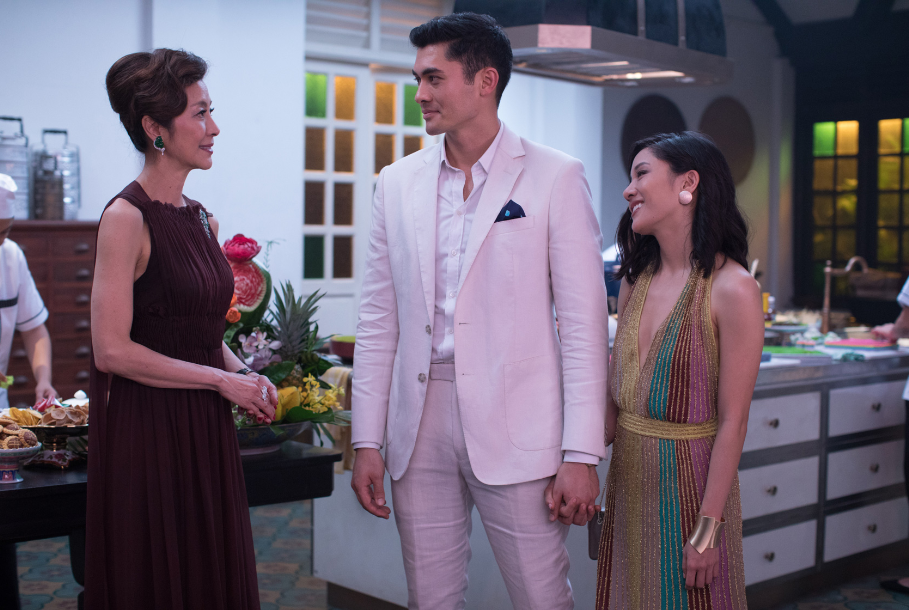
It is uplifting to watch Constance Wu, Henry Golding, Michelle Yeoh and Gemma Chan bring Rachel Chu, Nick Young, Eleanor Sung-Young and Astrid Leong-Teo, respectively, to life. Wu created a sense of a vulnerability and boldness that made her the perfect choice for Rachel.
Golding’s acting debut was a pleasant surprise as he played Nick like he was born to. He made cheesy lines work and provided naivety to a character that was put on a pedestal by everyone around him. Golding really embodied the character as there wasn’t an air of arrogance around him at all which made Nick more humbling and likeable.
There are also other stories that intertwine with the overall plot. One involving Eleanor, Nick’s mother. Michelle Yeoh’s performance is definitely a showstopper as she brings an authoritarian presence to the screen by showcasing how she is willing to do anything to uphold the stature of her family. At the same time, Yeoh also moves with such grace on screen that you can’t help but hold your breath in trepidation waiting for what she has to say or do next.
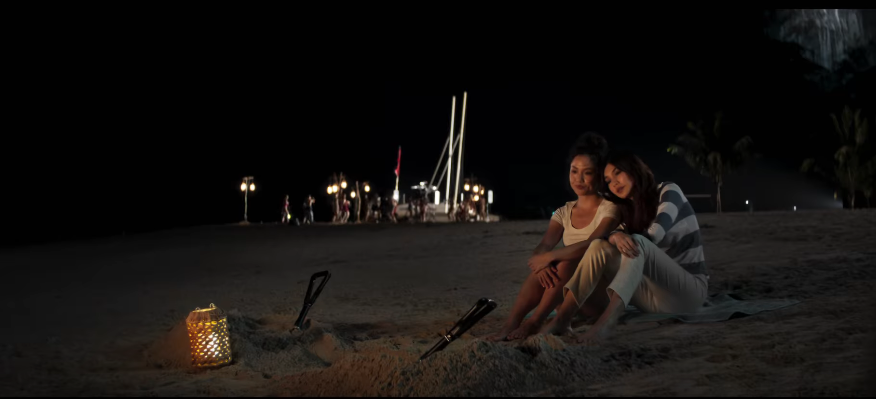
Astrid, Nick’s cousin, is another central character in the film. The former Oxford graduate covertly makes her mark in the world with one couture piece at a time. She is an intelligent, ethereal goddess with a heart and wallet of gold. Gemma Chan does a brilliant job of making Astrid warm and human among the ruthless and cold bourgeoisie. Chan really brings a regal presence to the screen while still maintaining heart through it all.
Awkwafina’s portrayal of Goh Peik Lim stole every scene that she was in with her unapologetic attitude and loyalty. Peik Lin is Rachel’s friend from college and like Nick, comes from a “comfortable” family in Singapore. Her comedic timing and one-liners are also something to look out for in the film.
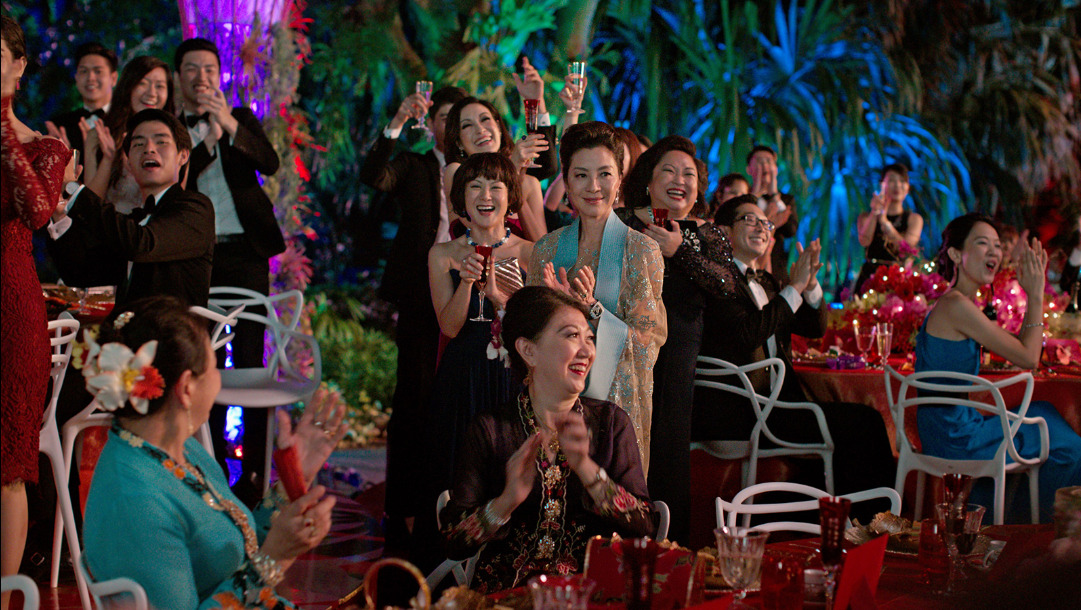
Crazy Rich Asians is a film that will fill you with joy, laughter and pride. The latter is due to being able to see yourself and/or your culture represented on screen through these characters. This film showcases part of the Asian community with characters from different parts of the world. The actors each bring a unique touch to their characters which is an absolute pleasure to watch.
The actors leave you wanting more and quite frankly – that’s the best kind of movie.
As her bigger-than-life Witness: The Tour wrapped up in Auckland, New Zealand (113 shows in total) just last week, let’s take one last look into Katy Perry’s most discussed but allegedly her least successful album and era Witness.
Released in June 2017, Witness marked Perry’s first official return to the music scene, following a 4-year hiatus which she spent on finishing her highest grossing Prismatic World Tour, did a record-breaking performance at the Superbowl 2015 and released ‘Rise’ which was used as NBC’s official broadcast theme song for the 2016 Olympics. The album has observed Perry’s departure from her signature Cotton Candy Cat Lady image and her catchy made-for-arena hooks, adopting a darker sound as she experiments (rather subtly) with electropop, dark dreampop and hip hop. With the absence of Dr. Luke and one of her favourites Bonnie Mckee (who were involved in the mega-releases ‘Teenage Dream’ and ‘PRISM’) and the appearance of new but important names in the credits, Perry was determined to take a different route.
Ditching her familiar producers and writers, Perry embarked on a different route.
For her comeback, Perry reunited with Max Martin – the only one member from her ‘dream team’ who produced five songs on the album – and Sia on her politically charged lead single, Chained to the Rhythm, featuring Skip Marley. The heavy 80s discopop song was a perfectly formulated radio-friendly single which attempted to poke at the idea (and danger) of living in a bubble, an intentional allusion to America following Donald Trump’s unfortunate win in the US Presidential Election in November 2016. Over the crispy clap-beats and funky electronic bass, Perry invites listeners to ‘dance to the distortion’ with their ‘rose-coloured glasses on’ while Marley comes in at the bridge as a reality check as he reminds them that ‘the time is ticking for the empire’.
The song, introduced by Perry as her ‘political liberation’, launched her new agenda as a ‘purposeful pop’ artist, which had consequently attracted strong reactions from some fans and the general public. Her political performances at the Grammys 2017 (displaying the US Constitution at the end of her performance while proclaiming ‘no hate’) and at the Brits 2017 (which featured the two giant skeletons that were meant to be Donald Trump and Theresa May) were bold and vocal but her actions had definitely berated some fans who did not want politics in music. Similarly, the music video, an engaging invitation into Perry’s Utopian world Oblivia, consisted both subtle and obvious hints at the current state of the world as well as at some agendas and policies by Trump’s administration. Unfortunately, Perry’s new direction was not only rejected by the right, but also by the left and the neutral. Briefly, she was deemed as being ‘fake woke’.
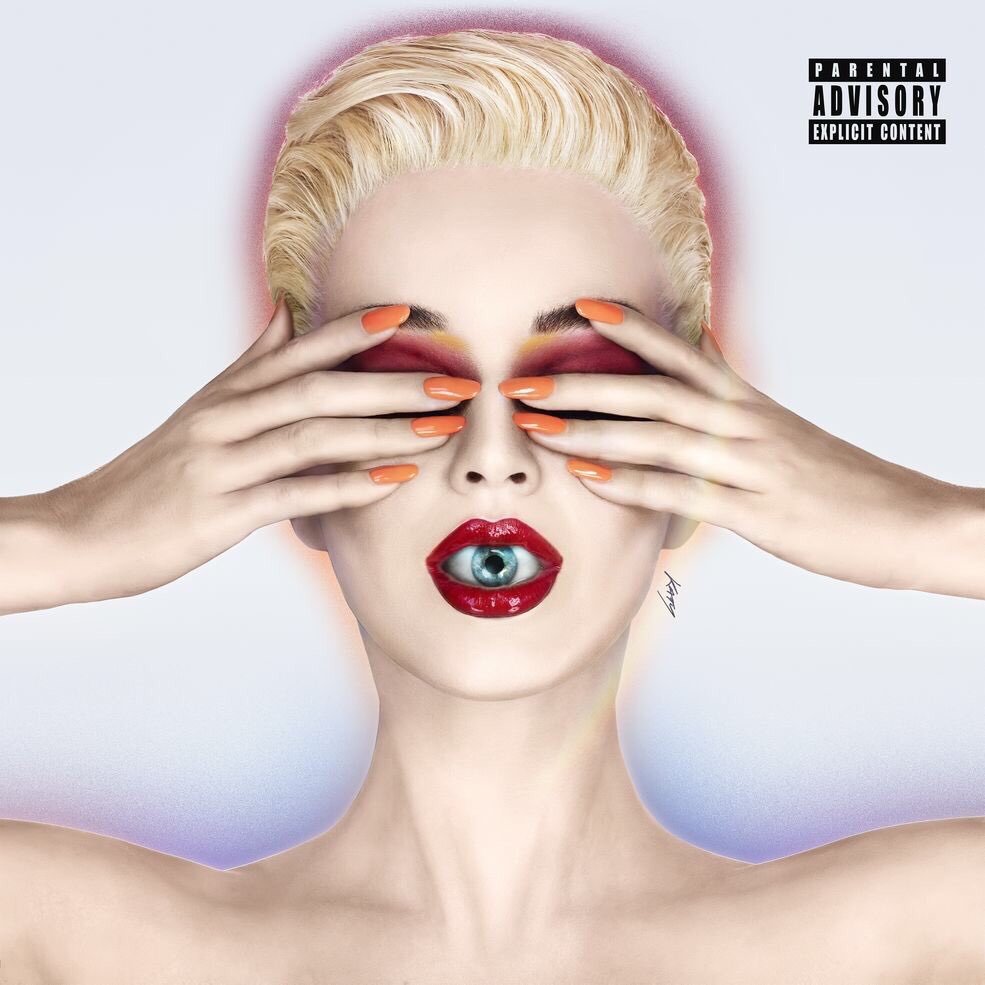
Album cover art for Witness. Source: katyperry.com/photos
Briefly, she was deemed as being ‘fake woke’ in the eyes of the left, the right and the neutral.
Moving on with her next single Bon Appetit,Perry focused on ‘sexual liberation’ and again, it was not well received by its audience. The promotion campaign for the single was of disastrous, as a mildly excited Perry was seen distributing cherry pies in Times Square, New York, telling passer-bys ‘to check out her new single’. It was definitely a confusing change to many as the song featured a heavy use of sexual innuendos over a series of dense catchy electronic beats, but Perry was the one to be blamed for not taking the extra mile to explain her theme of liberation. Rejection towards the song doubled when the featured Hip Hop trio Migos were accused of being homophobic. Weirdly enough, the news took a toll on Perry’s reputation as a LGBTQ+ ally but had barely any effect on Migos’s career.
The most discussed song on Witness would be none other than her first female collaboration, Swish Swish featuring Nicki Minaj. From the swaying hand holding a receipt in the cover art to the lyrical references and the stars-packed music video which claimed to be ‘the hottest mess’, Perry definitely did not shy away from embracing Pop culture. The decision to release the song as the third single is not a strategic one; with the song Perry had released three singles with features consecutively (an apparent attempt to sell and to promote), not to mention the song was an alleged counter-response to her then-nemesis Taylor Swift’s Bad Blood. To add to the drama, Minaj herself did not have a really pleasant history with Swift.
The song itself is a hit-and-miss for Perry. While some rejoice in Perry’s attempt to stand up for herself against Swift using internet slang like I stay winning, she keeps receipts, you should retire, some find Perry’s verses rather bland over the addictive bass and are overshadowed by Minaj’s part. Either way there is one thing for sure, the song sounded more like a Nicki Minaj featuring Katy Perry than the other way around.
On first glance, Swish Swish may seem like a desperate measure by Perry to stay relevant, but if you reviewed her past eras and the gimmicks involved, the song did make sense for a pop star like Katy Perry. She has always been known as the bubbly and quirky pop songstress that sings about cotton candy and being yourself; if you take her seriously, you miss the fun. As a matter of fact, the basketball-themed and meme-packed music video for Swish Swish seemed to be Perry’s announcement to the world that she is very well aware of what was happening, as Minaj told Perry to ‘get it together’ during the halftime show. At this point of the Witness era, it’s obvious Perry does not care whether her music still appeals to the charts anymore; she understands that it has been a mess but she does not give a f*ck. Ironically, this is also where we learn that Katy Perry is very lost.
Source: justjared.com
She does not care whether her music still charts; she does not give a f*ck anymore.
In the four-day livestream show which fans were able to observe her life, Perry had invited a therapist to discuss her struggle with her identity as a pop artist. In the session, Perry explained that she had received massive hate from people on the internet regarding her new agenda as well as her new pixie cut. At one point, Perry mentioned that she did not want to be Katy Perry, the glamourised name that had brought her fame and success. Instead she intended to return to her roots as Katheryn Hudson (her birth name). With the release of the Swish Swish MV, Perry somehow still showed the world the quirky side of Katy Perry, who doesn’t care to have fun by referencing and embracing pop culture. So, what exactly does Katheryn Hudson want people to witness? While Perry remains the only person who can answer the question, perhaps we can find bits of clues in her new music.
The album’s title track Witness, which its demo was leaked approximately two years ago, stirring a buzz among her fans that the artist was adopting a new sound. Indeed, since Wide Awake, Witness serves as her second tap into electronic music as she sings about her ‘looking for someone who speaks [her] language’. However, reaching into the bridge, the song sounds somewhat lacking although it does end on an interesting note: a nicely mixed echo of her whistle over the 1990s house piano. Perhaps Migos’ slot could be exchanged for Chance the Rapper on this track.
Perry continues the subtle dark sound with Hey Hey Hey, which features lyrics that connote a female’s strength in embracing her complexity and a blend of dreampop and pop rock, reminds fans of Perry as an empowerment goddess; RouletteandDeja Vu, which showcased her serious, solid and fresh attempts into dark electropop, especially the former that rang a bell of Lady Gaga’s The Fame Monster. The trio of songs also noted some of Perry’s best use of her vocals which rendered both a nostalgic and refreshing reminder to her vocals in her debut ‘One of the Boys’.
Other tracks like Miss You More, Tsunami and Save As Draft showcased Perry’s successful experiment with background production and the building of the vibe. In Miss You More, as the chorus hits, the heart-wrenching line ‘I miss you more than I love you‘ resonates powerfully with the regular crisp claps and its soaring piano, giving Perry one of her strongest chorus in her discography. Tsunami, the electronic house wavepop anthem, does not only mark Perry’s first collaboration with hit producer Mike-Will-Made-It but opens a new genre that Perry could definitely venture into in future projects.
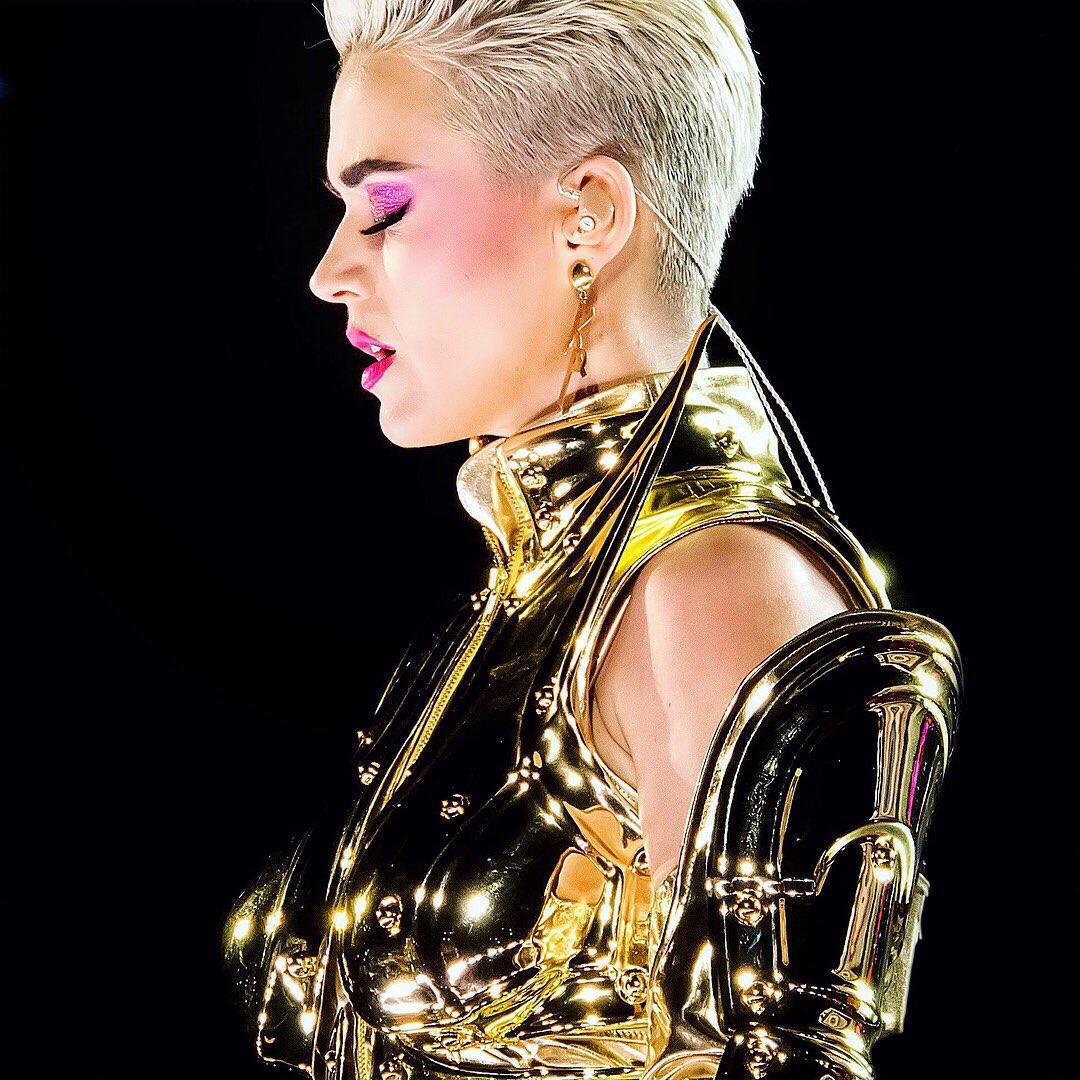
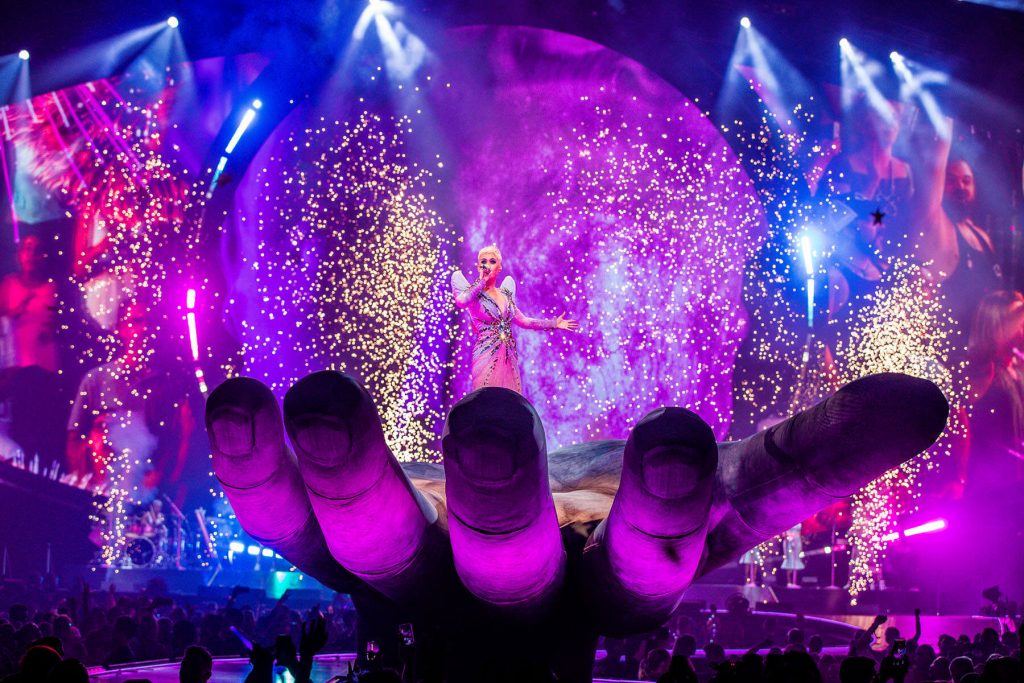
Katy Perry performing the opening act at Witness: The Tour. Photo by Rony Alwin. Source: katyperry.com/photos
One of the highlights of the album (and my personal favourite) is Power. In terms of lyrics and production, Perry hits home with a coming-about story which sees her rising into the phoenix that ‘breaks the cycle’ and ‘[is] done with [people] siphoning [her] power’. Tapping on electronic rock and a buzzing filter over the chorus, Power is Witness’s most experimental song and it thrived with absolute strength on Jack Garatt’s production. In memory, Perry’s last interesting and successful experiments, ‘Dark Horse’ and ‘Walking On Air’ were from her third LP, PRISM. Here’s a video of how Perry wrote the song with Jack Garatt.
Tapping on electronic rock, Perry ‘breaks the cycle’ and ‘is done with people siphoning her power’.
Another song that was worth mentioning on the album is Pendulum, another addition to Perry’s collection of self-empowerment songs. Unlike in Firework and Roar, Pendulum offers a more matured sound and perspective to brace life obstacles. Instead of belting out at the top of her lungs, Perry focused more on the lyrics, the production and her vocals in the comfortable range. The product was of enjoyable, as Perry encourages listeners to not ‘try and reinvent [their] wheel’ and compares life to a pendulum that ‘it all comes back around’ over a subtle but funky soft rock bass line. Perry’s collaboration with a school choir into second half of the song was a reasonable decision as it does not only enhance the uplifting mood of the song but also strengthens the message that Perry intended to convey.
Albeit the record did showcase more of Perry’s role as a serious songwriter, we witnessed her worst songwriting skills yet. Like its rather pointless autotune on the chorus, Mind Maze sounded lazy and demo-ish. Perry did explain the meaning behind the song but the chunky lyrics and the hardly digestible production could hardly appeal to anybody’s appetite. In terms of lyrics, Perry had written (in my opinion) some lines that were downright bad.‘Your words are like Chinese water torture’ in Déjà Vu, ‘I’m just another robot taking up oxygen’ in Bigger Than Me and ‘you cut me wide open / open sesame’ in Into Me You See were just too obvious to miss and frown upon. They had led me to wonder whether how did the lines even get the green light from the producers and other songwriters in the first place.
Although Witness did showcase more of Perry’s role as a serious songwriter, it also observed her worst songwriting skills yet.
In overview, Witness has definitely shown that Perry was willing to take a new route in writing her music but her attempt with this one was of mild and halfway-there. In the album, there were a lot of potentials that Perry could have taken advantage of and used them wisely to win the game but she was too preoccupied with her intention to denounce the pop star identity and to sound politically coherent. There were indeed a few good picks but at times the album sounded like it was hastily made. Perhaps the more accurate truth is Witness lacks a core that binds everything together. All One of the Boys, Teenage Dreams and PRISM were presented with their respective strong imagery that hit home; that one eye in the mouth in the cover art may seem artistically abstract but it does not really align with the music under the cover. It is still a relief to see the growth that Perry took especially in her decision of ditching some of her familiar and best craftsmen and craftswomen to experiment with electropop.
With an optimistic attendance of above 90% over 113 shows, Perry is here to stay. Photo by Rony Alwin. Source: katyperry.com/photos
As Perry herself has mentioned multiple times, numbers don’t lie. Even though Witness did debut at #1 on the Billboard 200 chart, it was also Perry’s first era without a #1 song on her once-familiar Billboard Hot 100 chart. Her highest attempt was at #4 with her lead single and it was also in this era that a Katy Perry single (both Bon Appetit and Swish Swish) had fallen out of the Top 40. However, in terms of streaming, Perry’s music videos still fared relatively well on Youtube; Bon Appetit even broke her own record for most views in 24 hours. As of the time of writing, Perry holds the record for having the highest streams of music for a female artist on Youtube and Spotify. On the other hand, her Witness: The Tour also managed to keep an optimistic attendance of above 90% for 113 shows, which is a strong sign that Perry is still a ‘courtside killer queen’.
Perhaps if we see Witness as a personal project that Perry had intended for herself, it would be a triumphant and relieving journey to consume. It is in this era that Perry acknowledged, addressed and apologised for the accusations of cultural appropriation that were thrown at her. It is in this era that Perry advocated for social justice and humanitarian effort in her loudest voice (from supporting the Black Lives Matter movement and openly marching in Women’s March to holding concerts to collect money for those affected by the wildfire in California). It is also in this era that Perry showed the music industry that politics is always in music and in any other forms of art. Finally, it is in this era that we must understand that Katy Perry is a human too.
LIPSTICK. In some cultures, women are shunned for wearing it, in others women are celebrated and sometimes they use it as war paint.
Poster for Lipstick Under My Burkha (2016).
This movie, although in Hindi, tells a compelling story of four women who try to overcome the adversities and boundaries that society sets for them with help from each other and their lipstick.
Set in Bhopal, Shireen, Usha, Rehana and Leela played by Konkona Sen Sharma, Ratna Pathak, Plabita Borthakur and Aahana Kumra respectively, each tell a story highlighting the struggles that they face in their village which will resonate with women from all over the world.
Released in 2016, this film focuses on two Indian-Muslim women and two Hindu women of different ages and with vastly different experiences, navigating through their suffocating lives.
Throughout the movie, they try to live vicariously through Rosy, the lead in the erotic pulp fiction novel Lipstick Dreams which is narrated throughout the movie. Rosy is portrayed as a sexually liberated woman who does not answer to the many names given to her by society and is unapologetic in her pursuit for happiness.
Covertly painting the town in red, the four leading women are the very definition of what it means to want freedom under oppression.
Shireen is a mother of three who wants to be more than just a housewife. Restrictions by her overbearing and controlling husband do not stop her from secretly working as a door-to-door sales woman and a good one at that.
Usha, the narrator of Lipstick Dreams, is a middle-aged widow who has been deemed as the “Buaji” (Aunty) of the community in Bhopal for so long that she forgets that she has a name and identity of her own. The community members see her as a piety figure who abstains from all things risqué and reckless and feels as if she must uphold this idea that they have of her.
A still from the movie showing Usha shying away from wanting to wear a bikini due to the pressures from her community. Source: BollywoodMDB.com
Rehana, a college student, is forced to work at her parents’ shop sewing burkhas but wants the freedom to express herself through her clothing, music and dance.
Leela is a beautician whose one goal is to make it out of Bhopal with her photographer boyfriend and travel the world. She is unfortunately chained to the responsibilities of improving her social standing by her mother.
A still from the film showing Rehana enjoying herself, moments before her parents ruin her fun. Source: BollywoodMDB.com
As these women try and find the balance between need and want, things become complicated for all of them.
Director Alankrita Shrivastava provides excellent insight of what it means to be a woman, living in a time where everyone else is moving forward and they are being held back.
It shows the similar struggles that all these women face under one roof despite their differences and these hardships are often caused by the people who are closest to them.
These strong and flawed women are brought together as the film highlights the glass ceilings built by society and showcases how they can be so much more than what others perceive them to be.
Lipstick Under My Burkha makes a bold statement that hopefully will leave a lasting impression for generations to come.
The four women who dominated the screen (from left to right): Shireen, Usha, Rehana and Leela. Source: BollywoodMDB.com







 Teh Tarik & Cendol